
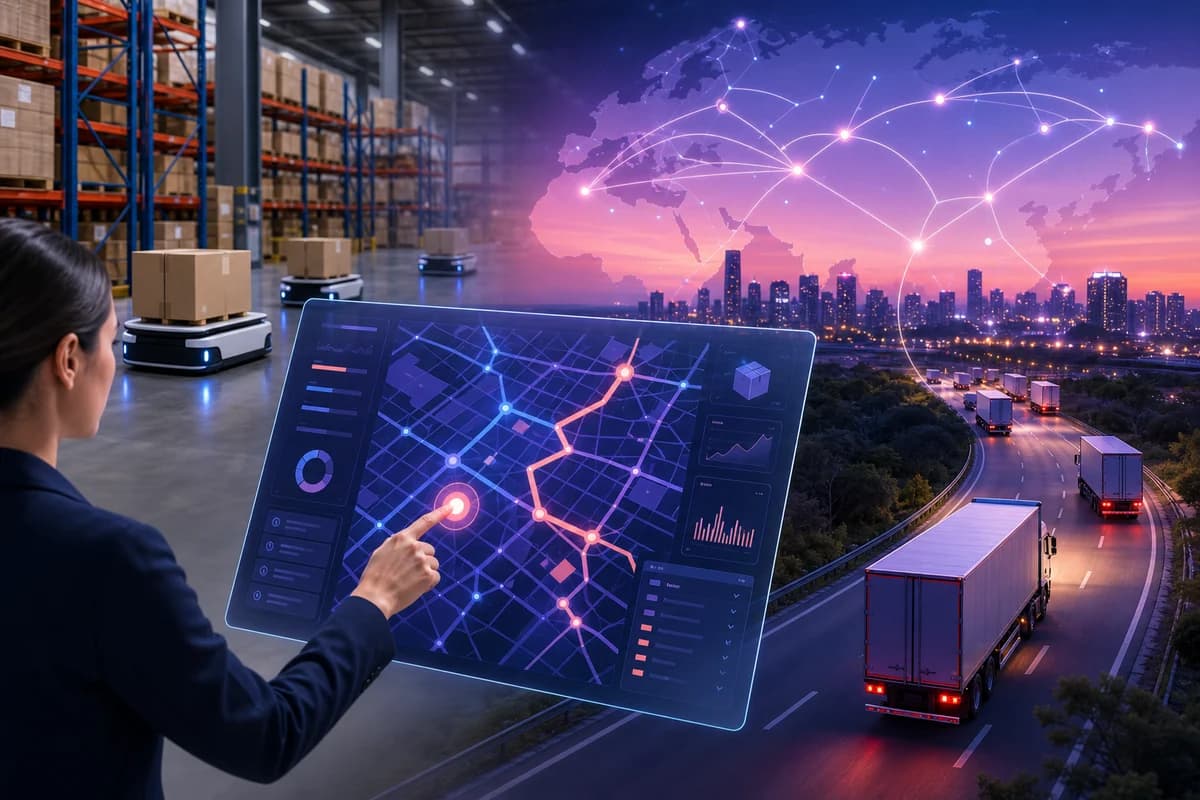
AI in Logistics
Logistics organizations use AI for shipment visibility, procurement support, demand forecasting, route planning, and inventory management. Better predictions and faster exception handling can reduce delays and operating costs.
Operational Applications
Strong logistics automation depends on connected systems, current data, and reliable recovery when integrations fail. Human operators remain essential for resolving exceptions and managing tradeoffs.
Build a shipment exception workflow
A logistics team could combine carrier events, order records, and delivery commitments into an exception queue. The system flags shipments that may need attention and drafts a status summary. An operator verifies the evidence before contacting a customer or changing an order.
A practical pilot
-
Match shipment identifiers across the warehouse, order, and carrier systems.
-
Treat missing scans and late data as uncertainty rather than confirmed loss or delivery.
-
Assign exception owners and ensure repeated events do not create duplicate tickets or messages.
Controls and limitations
Carrier information can arrive late or out of order. Define which system is authoritative for each status and avoid promises unsupported by confirmed events. Keep retries bounded and manual recovery available when a connector fails.
What to measure
Track time to detect and resolve exceptions, incorrect alerts, duplicate actions, and status-message accuracy. Separate improvements in visibility from actual changes in delivery performance.
Explore logistics system integrations.