
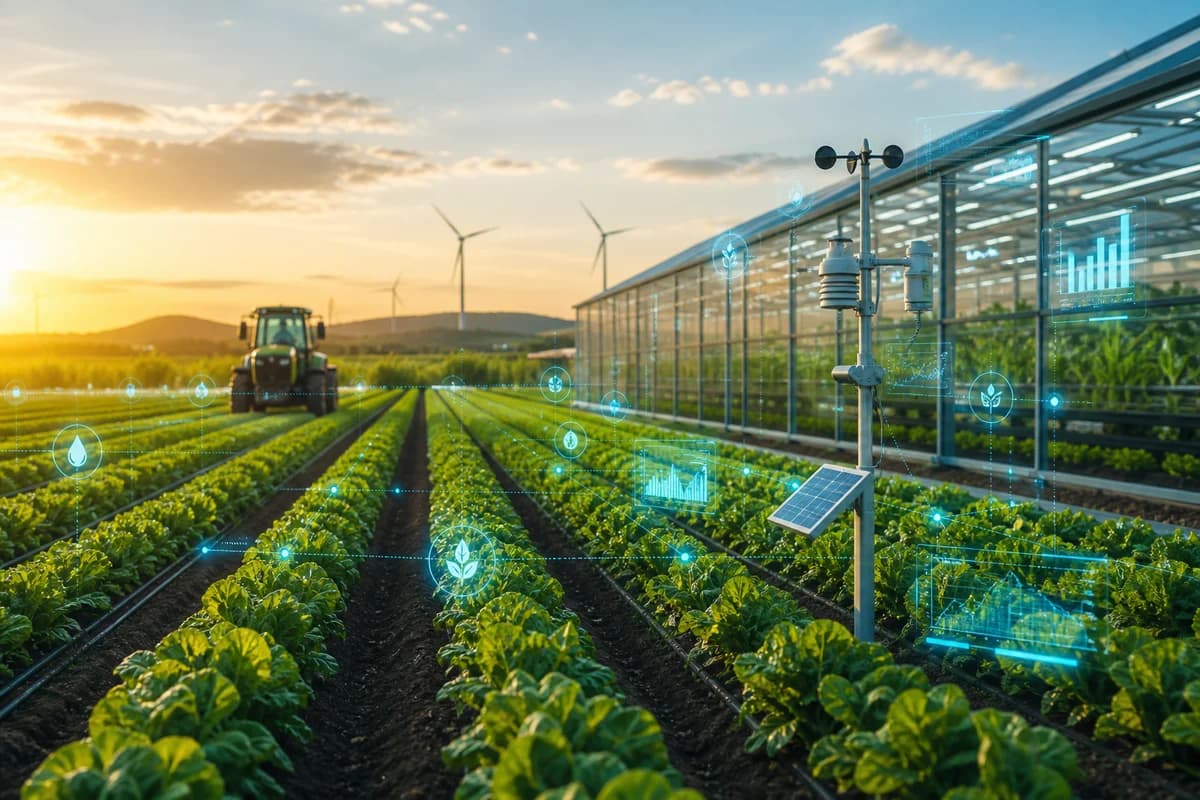
Agricultural Automation
AI is giving agricultural teams new ways to monitor crop health, forecast conditions, and optimize irrigation or input usage. Predictive analytics and field data can support better timing and more targeted interventions.
Impact on Farming
The best results combine technology with local knowledge. Farmers and agronomists remain essential for interpreting model outputs, accounting for changing conditions, and deciding how recommendations should be applied.
Start with an irrigation review workflow
Consider a farm that records soil moisture, irrigation events, rainfall, and crop stage. A useful first project is a daily review queue that highlights fields needing attention. The model suggests which observations deserve inspection; the grower decides whether watering should change. This is more manageable than immediately allowing a model to operate irrigation equipment.
A practical pilot
-
Connect readings to the correct field, sensor, and timestamp. Flag missing or stale measurements before producing recommendations.
-
Compare recommendations with the existing irrigation schedule and local observations. Keep a record of overrides and the reasons for them.
-
Trial one crop and a limited set of fields through changing conditions before expanding the workflow.
Controls and limitations
Sensor errors, weather changes, and differences between fields can make historical patterns misleading. Define a safe manual operating mode and involve an agronomist when recommendations conflict with crop conditions. Do not assume a model trained elsewhere will transfer successfully.
What to measure
Track water applied per field, time spent reviewing readings, recommendation overrides, and crop outcomes. Compare similar fields and seasons where possible; changes in weather or crop mix can distort a simple before-and-after comparison.
Explore connected workflow automation.